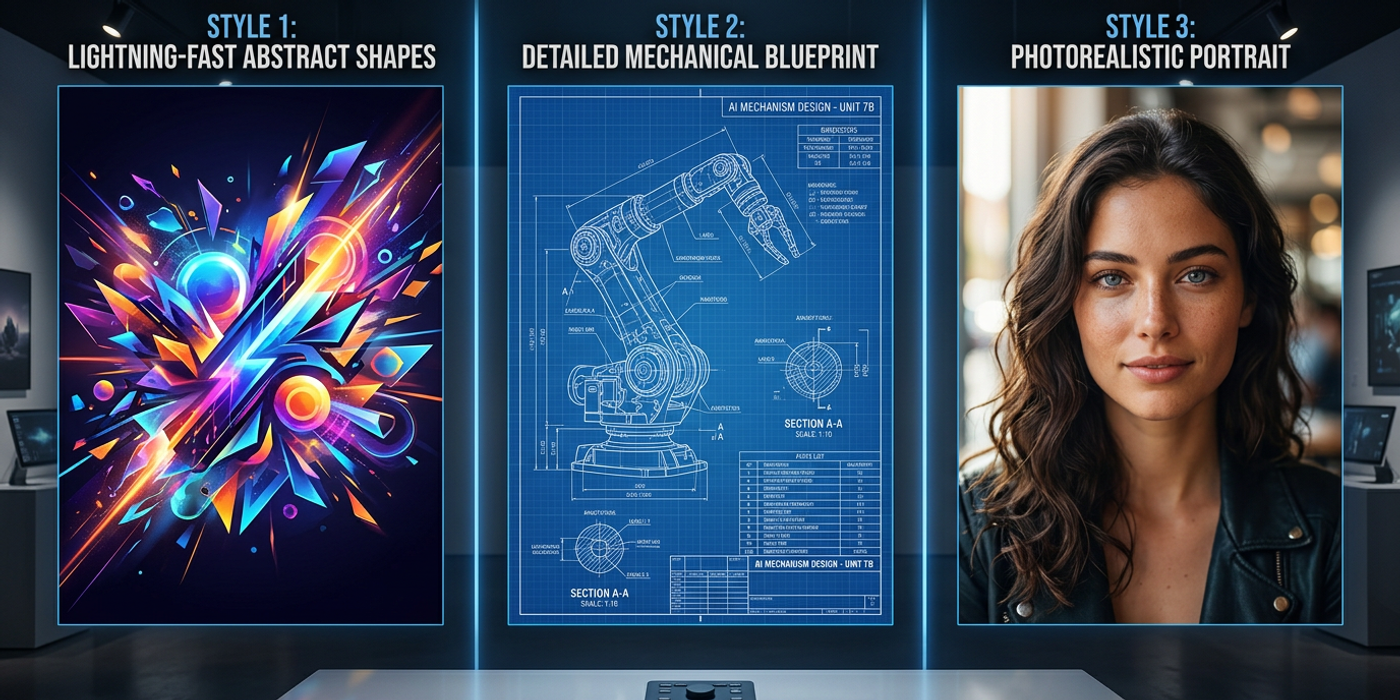
The classic AI image model trio — Flux Schnell, Stable Diffusion, DALL-E — faces new contenders. Are they still relevant for HK creators in late 2026?
What Changed Between June and August 2026
Three months might not sound long, but in AI image generation, it is an eternity. Since the original comparison was published in June:
- GPT-Image-2 (OpenAI) launched in late June, surpassing DALL-E 3 on prompt adherence and natural language understanding - Nano Banana 2 (Sakana AI) debuted in July with unprecedented prompt fidelity and artistic composition - Seedream 4 (ByteDance) arrived in June, matching DALL-E on photorealism while generating in half the time - xAI Imagine 2.0 added editing tools and templates in August - Ideogram 4.0 went open-weight with native 2K resolution output - Microsoft MAI-Image-2.5 matched Nano Banana 2 on quality benchmarks
The market that was three horses in June is now a crowded field. The question is not just which of the original three to pick — it is whether any of them still lead in their original category.
Flux Schnell — Speed Leader Under Threat
Flux Schnell (Black Forest Labs) still generates images in 1-2 seconds, making it the fastest dedicated image model on Cooly Studio. But the competition has caught up.
Seedream 4 produces quality comparable to DALL-E in roughly half the time (5-8 seconds). Nano Banana 2 delivers better compositions at 4-6 seconds. Even GPT-Image-2, while slower, processes complex prompts with fewer retries needed.
Where Flux Schnell still wins: High-volume workflows — moodboarding, batch social media content, rapid idea exploration. If you are generating 50+ images per session, the time savings compound. For anything requiring pixel-level quality or complex prompt rendering, newer models have pulled ahead.
When to consider alternatives: Client-facing assets, detailed product renderings, and any scenario where quality trumps iteration speed. Seedream 4 or Nano Banana 2 deliver better results with minimal extra wait time.
Stable Diffusion — The Ecosystem Advantage
Stable Diffusion (SDXL, SD3, SD3.5) remains the most customizable image generation platform available. No other model — old or new — matches its ecosystem of ControlNet, LoRAs, IP-adapters, and community fine-tunes.
This matters most for Hong Kong agencies with specific brand requirements. Need consistent product photography across 200 SKUs? Stable Diffusion with a product LoRA outperforms any closed model. Need character consistency for a campaign series? SD with IP-adapter is still the gold standard.
What changed: SD3.5 has improved base quality significantly, narrowing the gap with closed models. The community has produced fine-tunes specializing in architectural visualization, food photography, and East Asian aesthetics — all directly relevant to HK creative workflows.
The trade-off remains unchanged: Speed (5-15 seconds) and complexity remain barriers. But if you need control that no closed model offers, SD is still the only real choice in late 2026.
DALL-E — Quality Leader Overtaken
This is where the biggest shift has happened. DALL-E 3 was the undisputed quality leader in June. Three months later, it has been overtaken by multiple models.
GPT-Image-2, OpenAI's own successor, surpasses DALL-E 3 in every quality metric — better text rendering, more natural lighting, more accurate prompt adherence, fewer artifacts. For HK creators paying per generation, GPT-Image-2 reduces the retry rate significantly and lowers overall cost.
Nano Banana 2 and Seedream 4 both match or exceed DALL-E 3 output quality while generating faster and offering more stylistic variety.
Where DALL-E 3 still has a place: Legacy workflows, API integrations already built around OpenAI's ecosystem, and scenarios where GPT-Image-2 is not available. Its text-in-image generation, while no longer best-in-class, remains competitive.
For new projects starting in August 2026: Skip DALL-E 3 unless you are already integrated with OpenAI's API. GPT-Image-2 is the better choice from the same provider.
Should You Switch or Stay?
| Use Case | June 2026 Pick | Late 2026 Pick | Why | |----------|---------------|----------------|-----| | Rapid prototyping | Flux Schnell | Flux Schnell | Still fastest for volume | | Client-ready assets | DALL-E 3 | GPT-Image-2 or Seedream 4 | Better quality, fewer retries | | Brand style control | Stable Diffusion | Stable Diffusion | Ecosystem unmatched | | E-commerce product photos | Stable Diffusion | SD with specialized LoRAs | Better results, same workflow | | Social media batch content | Flux Schnell | Flux Schnell or Seedream 4 | Speed or quality option | | Photorealistic hero images | DALL-E 3 | Nano Banana 2 or Seedream 4 | New quality leaders |
Frequently Asked Questions
Q: Is Flux Schnell still the fastest AI image model in late 2026? A: Yes. At 1-2 seconds per generation, no mainstream model matches its raw speed for image generation.
Q: Has Stable Diffusion been overtaken by newer models? A: For out-of-the-box quality, yes — Seedream 4 and Nano Banana 2 produce better results. But SD's ecosystem of LoRAs, ControlNet, and community fine-tunes remains unmatched for specialized workflows.
Q: Should I still use DALL-E 3 or switch to GPT-Image-2? A: Switch to GPT-Image-2. It is from the same provider, understands prompts better, and produces higher quality with fewer retries.
Q: What about Ideogram 4.0 — is it worth trying? A: Yes. Its open-weight 2K resolution output is unique among image models, making it excellent for large-format assets.
Q: Which model is best for Hong Kong e-commerce product photography? A: Stable Diffusion with a custom LoRA trained on your products still produces the most consistent results for catalog-scale work.
Q: How do I choose between Nano Banana 2 and Seedream 4? A: Nano Banana 2 excels at artistic composition and prompt fidelity. Seedream 4 is stronger at photorealism and speed. Both outperform DALL-E 3.
Q: Is Flux Schnell good enough for client presentations? A: For rough concepts and moodboards, yes. For final client presentations, use Seedream 4 or Nano Banana 2 for better quality.
Q: Will the original three models become obsolete? A: Likely yes for DALL-E 3 (replaced by GPT-Image-2 within OpenAI's ecosystem). Stable Diffusion will remain relevant for customization. Flux Schnell retains its speed niche.